Anime News 18 min read
Solo Leveling Anime vs Manhwa: Key Differences & Cut Scenes
K
Kenji SatoPublished June 5, 2026
Verified Editorial Analysis
Quick Facts & Profile Summary
Animation StudioA-1 Pictures (CloverWorks Group)
Original Manhwa ArtistDUBU (REDICE Studio) & Chugong
Key Narrative ChangeEarly Introduction of Jeju Island & International Politics
Japanese Version NamesMizushino Shun (Japan Broadcast) / Sung Jin-woo (Global)
Character ExpansionsLee Joohee, Cha Hae-In, Choi Jong-In, Go Gun-hee
Violence & GoreUncensored Crimson Palette Matching Manhwa Intensity
Audio InnovationHiroyuki Sawano Symphonic Electronic Soundtrack
Adapting a Legendary Webtoon: The Challenge Faced by A-1 Pictures
Adapting Solo Leveling into an animated television series was widely considered one of the highest-risk endeavors in the anime industry. DUBU's vertical-scroll manhwa format was famous for its hyper-detailed digital rendering, vibrant neon blue and purple magical lighting, and kinetic panel transitions that felt almost impossible to replicate in traditional 24-frames-per-second 2D animation.
Led by director Shunsuke Nakashige at A-1 Pictures, the production team made deliberate structural choices: rather than producing a panel-by-panel photocopy, they synthesized elements from Chugong's original web novel, reordered chronological timelines, and expanded side character perspectives to transform a solo power fantasy into an ensemble epic.
Pacing & Narrative Restructuring: Early Foreshadowing of Jeju Island
The most significant narrative improvement in the anime adaptation is the **early introduction of Jeju Island**.
In the original manhwa, Jeju Island is barely mentioned until Chapter 65, suddenly becoming an urgent crisis right before the 4th raid. The anime, by contrast, introduces the ruined island and its nightmarish giant ant mutations in **Episode 1**. Viewers witness Chairman Go Gun-hee monitoring reconnaissance satellite feeds and Japanese Hunter Association President Matsumoto Shigeo plotting geopolitical leverage from the very beginning. This restructuring gives the entire world a cohesive sense of impending dread.
Expanded Character Backstories: Lee Joohee, Song Chi-Yul & Cha Hae-In
The webtoon was often critiqued for sidelining its supporting cast once Jin-woo unlocked overwhelming godlike strength. The anime actively rectifies this flaw by giving side characters meaningful emotional depth:
- **Lee Joohee:** The anime provides tender, melancholic scenes showing Joohee's severe post-traumatic stress disorder following the Cartenon Temple massacre, highlighting her inner turmoil as she realizes she cannot keep up with Jin-woo's dangerous trajectory.
- **Song Chi-Yul:** The elderly C-Rank swordsman is given extended training flashbacks and poignant dialogue expressing guilt over losing his arm and leading young hunters into a slaughterhouse.
- **Cha Hae-In:** Cha Hae-In makes multiple organic appearances across Seoul prior to her formal manhwa debut, establishing her dedication to training and her sensory discomfort around foul-smelling hunters.
Japanese Hunter Politics: Goto Ryuji & The Draw Sword Guild Revisions
In the original Korean light novel and manhwa, the Japanese Hunter Association was portrayed with overt antagonism—scheming to abandon the Korean strike team on Jeju Island to weaken South Korea's national power and force diplomatic subservience.
For the Japanese television broadcast, A-1 Pictures adjusted this dynamic into a mutual, high-stakes military alliance. Japanese S-Rank leader **Goto Ryuji** is portrayed as a disciplined, ambitious master swordsman seeking National Level status rather than a cartoonish villain, lending greater dramatic weight to his eventual slaughter by the Ant King.
Censorship & Visual Intensity: Gore, Blood & Manhwa Panel Accuracy
Fans of the manhwa were rightfully anxious about whether television broadcast standards would sanitize the brutal violence of the series—such as Jin-woo decapitating Hwang Dong-suk's strike squad or the Cartenon God Statue incinerating hunters.
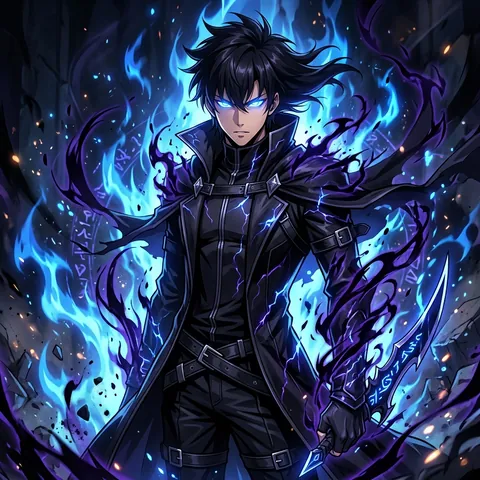
A-1 Pictures completely bypassed censorship concerns. The anime embraces visceral, R-rated graphic intensity: severed limbs, visceral blood splatter, and psychological terror are animated with uncompromising detail. Key iconic panels—such as the God Statue's grotesque, smiling sneer and Jin-woo's glowing ocular flare when commanding 'Arise'—were recreated with exact compositional fidelity.
Soundtrack & Audio Design: Hiroyuki Sawano's Masterpiece
The introduction of audio is the single greatest elevation of the medium. Legendary composer **Hiroyuki Sawano** (Attack on Titan, Kill la Kill) crafted a breathtaking musical score combining heavy orchestral brass, industrial synthesizers, and soaring vocal tracks featuring artists like TOMORROW X TOGETHER and Benjamin.
The acoustic design of Jin-woo's daggers—the high-pitched metallic ping of Kasaka's Poison Fang parrying stone weapons, and the resonant sub-bass drop whenever the System window appears—creates an auditory identity that panels alone could never convey.
The Definitive Verdict: Should You Read the Manhwa or Watch the Anime?
The anime and manhwa are not competing products—they are complementary masterpieces.
The manhwa remains the pinnacle of digital webtoon artistry, offering instantaneous pacing and DUBU's legendary visual compositions. The anime, meanwhile, delivers superior world-building, emotional character depth, and peerless audio-visual spectacle. For the ultimate Solo Leveling experience, enjoying both mediums in parallel is the definitive recommendation.
The Double Dungeon Tone: Atmospheric Horror vs Dynamic Action
The opening episodes of the anime demonstrate a profound tonal shift compared to the early manhwa chapters. In the webtoon, while the God Statue's smile was horrifying, the rapid vertical scroll format allowed readers to quickly digest the action.
Director Shunsuke Nakashige deliberately paced the Cartenon Temple episodes as pure psychological horror. Drawing inspiration from classic survival cinema, the anime lingers on the eerie acoustic silence of the temple, the sickening crunch of bone as guardian statues crush fleeing hunters, and the hyperventilating panic of Lee Joohee. This patient direction establishes the traumatic baseline that makes Jin-woo's eventual rise feel deeply earned.
The Hwang Dong-suk Execution: Moral Ambiguity and Justice
In Chapter 24 of the manhwa, when Jin-woo eliminates Hwang Dong-suk and his traitorous strike squad inside the Cartenon boss room, the art emphasizes Jin-woo's cold, calculating expression as the System issues the emergency quest.
The anime adaptation elevates the dramatic stakes by highlighting Jin-woo's internal moral revulsion. He does not take pleasure in killing humans; rather, viewers see the visible trembling of his fingers and the terrifying realization that the System is systematically conditioning him to become an emotionless executioner. This psychological nuance transforms a simple self-defense scene into a haunting character turning point.
Visual Pacing: The Webtoon Scroll Experience vs 16:9 Cinematography
The transition from vertical digital webtoon to widescreen 16:9 television framing required ingenious compositional adjustments. DUBU's manhwa was famous for vertical panels spanning multiple screen lengths—allowing daggers to streak downward across meters of digital canvas.
A-1 Pictures translated this vertical kinetic energy into multi-plane rotational camera movements. During the Igris duel and Kasaka serpent fight, the camera spins around Jin-woo in three dimensions, using background motion blur and dynamic lighting to capture the exact velocity that made DUBU's artwork famous worldwide.
Frequently Asked Questions
Key Questions Answered
Yes. The anime is extremely faithful to the core plot, but enhances the story by reordering scenes, expanding side characters, and including rich lore from the original web novel.
K
About the Author
Kenji Sato
Dedicated manhwa analyst and pop-culture researcher covering the South Korean webtoon ecosystem, Chugong's lore universe, and A-1 Pictures adaptations.
Ready to read the original manhwa chapters?
Read all 200 chapters of Solo Leveling from Chapter 1 to the epilogue in high definition.